
Oakland Projected Date Labels
Michigan OTIS does not use one universal projected release date for every state-prison case. Four labels tell a sequence. The Parole Board Jurisdiction Date, also called the Earliest Release Date or ERD, is the first date on which the Board can exercise jurisdiction. The Maximum Date is the possible end of confinement or jurisdiction under the maximum sentence and any lawfully applicable credits. Date Paroled records the actual exit from prison into supervision. Discharge Date records the later end of MDOC jurisdiction.
The first two fields are planning boundaries. The last two document completed events. A person may reach ERD and remain in prison after a denial or deferral. A parole grant can also precede the physical exit while placement or another issue is resolved. For Oakland County jail custody, CLEMIS Released Date and the OCSO release record serve different roles from OTIS.
| Official field | What it means | What it does not prove |
|---|---|---|
| ERD / Parole Board Jurisdiction Date | First parole eligibility or Board-jurisdiction date | A promised release |
| Maximum Date | Potential maximum under the sentence and applicable rules | The day release will certainly occur |
| Date Paroled | Actual prison exit into parole supervision | End of MDOC control |
| Discharge Date | Actual end of MDOC jurisdiction for the sentence | Always a community release |
Find an Oakland Release Date
Start with the known custody. OTIS expressly excludes county jails, city lockups, and people sentenced only to jail. The search is correct for an Oakland County person committed to MDOC, even if the prison is elsewhere in Michigan. County confinement requires CLEMIS, OCSO records, and the sentencing court instead.
- Identify whether the person is pretrial, serving an Oakland County jail sentence, or serving an MDOC prison sentence. Do not infer release from roster disappearance.
- For MDOC custody, search OTIS by the six-digit MDOC number when possible. Otherwise use name and identity filters, then compare Oakland County and the court file.
- Read ERD, Maximum Date, current status, sentence rows, and any Date Paroled or Discharge Date. Save the exact field labels and lookup date.
- For county jail, check the official CLEMIS locator and the court's judgment or sentence. Call OCSO Inmate Information when the online record is unclear.
- After the expected date, compare the actual CLEMIS Released Date or OTIS Date Paroled with the release record and court authority.
The OTIS field explanation is especially useful when a profile shows several dates. It distinguishes eligibility from actual release and warns that status and date information can change.
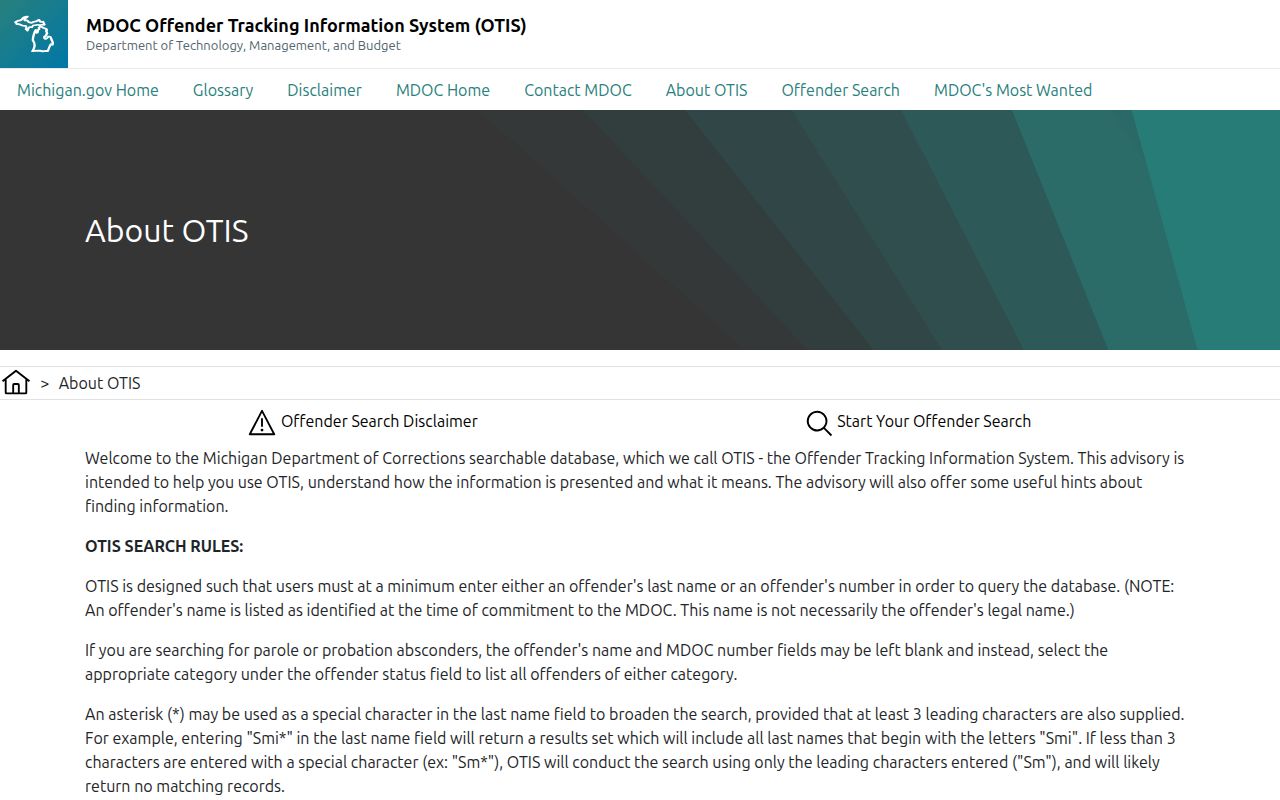
The source definitions should control over shorthand. Calling ERD “the release date” overstates what the Parole Board and sentence record establish.
Oakland Pretrial Release Has No Date
A person awaiting trial usually does not have a sentence-based projected release date. Bond may authorize release, but payment, court conditions, another warrant, or a detainer can delay or prevent departure. A dismissal can end one case while another case still holds the person. A remand means the court sent the person back into custody. These are legal events, not arithmetic from a sentence length.
Use the court of jurisdiction for bond and case status. Oakland misdemeanors stay in district court, while a felony begins there and moves to Sixth Circuit after bindover. Pair the order with OCSO's custody record because a docket may show authority to release without the exact time jail staff finished processing.
For a scheduled jail outdate, the pickup person checks at the Bonding window. Staff perform a current LEIN check for holds, warrants, and detainers. Only after clearance does OCSO aim to release as close to 12:01 a.m. as possible. This is a local processing practice, not a promise that every case ends at that time.
Michigan Truth in Sentencing
Michigan is not governed by a generic “85 percent” release rule. The MDOC glossary says truth in sentencing requires full service of the judicial minimum in prison before parole consideration for covered modern offenses. It eliminated good time and disciplinary credits for assaultive crimes committed on or after December 15, 1998, and for other crimes committed on or after December 15, 2000. Major misconduct can add disciplinary time for Board consideration.
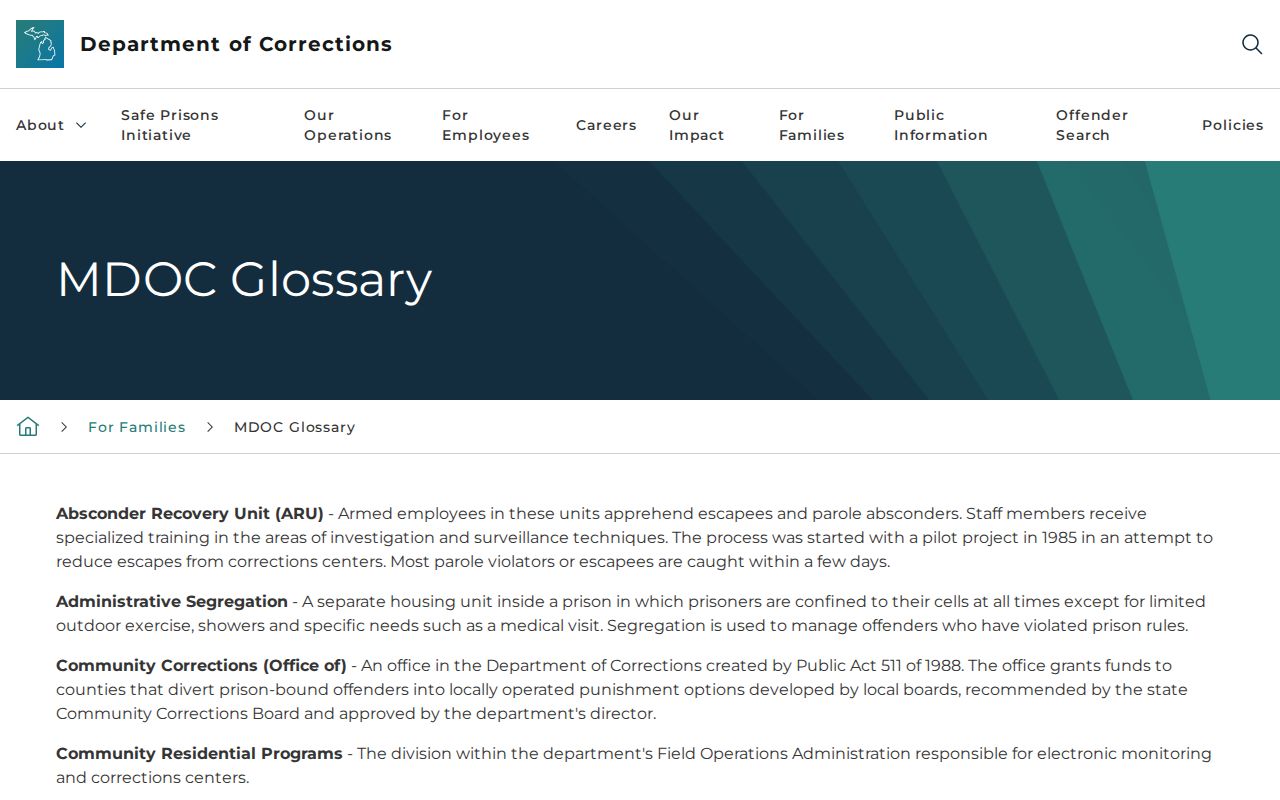
The glossary shows why offense date and offense category must be known before any credit rule is applied. A modern sentence cannot be shortened with a legacy formula simply because an old-style term appears elsewhere.
Older cases can follow older regimes. MDOC describes good time for eligible offenses before April 1, 1987, generally at five to fifteen days per month with possible exemplary time. Eligible offenses after that date and before the relevant truth-in-sentencing cutoff could receive disciplinary credits, generally five days per month plus two exceptional days, up to 84 days per year. MCL 800.34 defines disciplinary time, and MCL 800.35 calls for implementing rules.
Michigan usually uses an indeterminate prison sentence with a minimum and maximum. MCL 791.234 governs when the Board gains jurisdiction. Consecutive minimums and maximums may be aggregated as the statute directs. None of these rules makes ERD an appointment for physical release.
Oakland Jail Good-Time Calculation
Oakland County jail sentences follow a separate statute from MDOC prison terms. Under MCL 51.282, a sentenced county-jail prisoner without rule violations receives one day of reduction for every six days of sentence. The sheriff can forfeit and restore credit under approved rules. MCL 51.283 requires posting the rules and allowance and places responsibility on an eligible prisoner to call the entitlement to the sheriff or deputy's attention.
Oakland Program Services separately states that successful completion of specified Cognitive Behavioral and LESP-M programming may earn up to a 25-percent sentence reduction. That is a program and eligibility fact, not an automatic discount for every jail sentence. Court authority, eligibility, completion, misconduct, other cases, and holds still affect the outcome.
These local rules must not be mixed with parole, ERD, or state-prison truth in sentencing. The 1-for-6 calculation applies to an eligible county-jail sentence. The Board does not parole someone from an Oakland jail term.
No statewide law or Oakland rule was found that promises a Friday release because an outdate falls on a weekend or holiday. Use the actual OCSO scheduled-outdate procedure and call before relying on travel plans.
Why Oakland Release Dates Change
A date can move because the legal calculation, decision, or custody destination changed. The reason should be tied to an official record rather than guessed from a roster.
| Factor | Possible effect | Where to verify |
|---|---|---|
| Parole grant, denial, or deferral | Changes whether or when release planning proceeds after eligibility | Board record and later OTIS Date Paroled |
| Misconduct or credit decision | Changes applicable disciplinary time or county credit | MDOC sentence record or OCSO/court record |
| Consecutive or new sentence | Adds terms or changes the controlling maximum | Judgment, amended sentence, and OTIS |
| Appeal or corrected order | Changes the lawful sentence calculation | Sentencing court docket and corrected record |
| Warrant, hold, or detainer | Turns an expected community release into delay or transfer | Releasing agency and receiving jurisdiction |
| Parole rescission or violation | Stops or changes a planned release | MDOC and Board records |
A county jail “release” can mean transfer to MDOC, another jail, the U.S. Marshals Service, or ICE. A federal locator can likewise say Released while another jurisdiction follows. Always state which agency's custody ended.
A later credit determination can also alter an OTIS maximum field. MDOC cautions that projected information is subject to change, which is why the lookup date matters. Do not calculate a new official date by subtracting a credit from the public profile. The agency and court apply the controlling sentence, offense-date rules, consecutive terms, and any disciplinary record.
Oakland Release-Date Record Requests
When public fields do not resolve the date, request the existing record from the agency that owns it. OCSO Records can provide a releasable booking and release record. A former inmate may also appear with government photo identification and the relevant incarceration dates for a free proof-of-incarceration letter. The public description does not promise that this letter includes a release reason or future date.
A focused Oakland County FOIA request should identify the person, approximate booking date, and inmate or booking number when known. Ask for existing fields showing admission date and time, release date and time, release disposition, releasing authority, and a public transfer destination. Michigan FOIA generally calls for a written response within five business days and permits one written extension of up to ten business days. Permitted search, review, redaction, copy, and mailing fees depend on the request.
For MDOC custody, request an existing sentence, date-paroled, status-history, or discharge record through MDOC FOIA. Current prisoner-record questions use Corr_Records_Info@michigan.gov. Past records up to six years after release use MDOC-Records_Retention@michigan.gov. A request response may add source detail, but it still cannot turn a Board eligibility date into a guarantee.
Oakland Federal Release-Date Boundaries
A federal sentence uses the Bureau of Prisons locator, not OTIS. BOP results can show a release date and a location or status such as Released or Not in BOP Custody. Those words establish departure from BOP custody only. Another jurisdiction, supervised release, or immigration custody may follow, and First Step Act recalculations can move projected dates.
Federal pretrial prisoners are often under U.S. Marshals Service authority, even when housed in a local facility. USMS has no public inmate locator, so use the federal court docket and counsel or court contacts. ICE's Online Detainee Locator is the next check when the record suggests immigration custody. No official evidence shows a current Oakland County Jail ICE detention contract, but an individual detainer can still change an expected community release into a transfer.
Each database describes only its own custody. CLEMIS, OTIS, BOP, and ICE dates are not interchangeable. State the source agency beside every projected or completed date.
Confirm Oakland Actual Release
For Oakland County Jail, compare the CLEMIS Released Date with the OCSO booking/release record and the court order. The public released view covers a rolling 72-hour window and can lag. After that window, request the record from OCSO Records or obtain a proof-of-incarceration letter when the former inmate qualifies for that in-person option.
For a state-prison case, Date Paroled is the actual exit into parole. Current Status “Discharged” with Discharge Date shows the later end of MDOC control. If precision is needed, request the existing record from MDOC and compare it with the sentence. A death discharge is not a community release.
MI-VINE may send a release or transfer notice. Registering before the expected event can provide a timely signal, but Michigan publishes no fixed period during which a released result remains searchable. The VINELink Inmate Search explains the one-person notification route. Treat an alert as a prompt to check OCSO, court, or OTIS.
Note: Preserve the lookup date and exact status phrase because projected fields and custody records can be corrected or updated.